When it comes to fuelling your workouts with protein, the advice out there is… all over the place.
Some swear by getting it in before you train. Others say it’s all about the post-workout window. Then there’s talk of fasted training, anabolic timing, and a million other opinions floating around online.
So, what’s the truth? Is it better to have protein before or after your workout, and does the timing actually matter?
Let’s break it down properly.
Key takeaways
-
Protein before and after training can both support muscle recovery
-
Carbs fuel performance, protein supports repair
-
The “anabolic window” is wider than most people think
-
Total daily protein matters more than perfect timing
- Spreading protein across the day supports better results
Why protein is so important when you train
Every time you train, whether it’s lifting weights, doing intervals, or going for a long run, you place stress on your muscles. That stress triggers a natural rebuilding process that helps your body adapt and come back stronger.
Protein supports that process by supplying the amino acids your body needs to repair and rebuild.
It helps:
-
Support muscle recovery
-
Maintain and build lean muscle
-
Reduce post-workout soreness
-
Stabilise energy levels
-
Keep you fuller between meals
Without enough protein across the day, recovery slows, energy dips, and progress becomes harder to maintain.
What happens if you eat protein before training?
As protein digests, it’s broken down into amino acids that circulate in your bloodstream during your session. That means your muscles already have access to what they need while you’re lifting, running, or pushing through tough sets.
That said, pre-workout nutrition is primarily about carbohydrates. Carbs are your body’s preferred fuel source during exercise. Protein plays more of a supporting role.
Including some protein before training can:
-
Help limit excessive muscle breakdown during longer or harder sessions
-
Support more stable energy when paired with carbs
-
Help with satiety if you’re training later in the day
- Make it easier to distribute protein intake evenly across your day
The key is keeping it light and easy to digest, especially the closer you are to training.

Easy pre-workout options
- Greek yoghurt with berries – A simple combo of carbs and protein that won’t feel heavy.
- Eggs on wholegrain toast – A more filling option if you’re eating 1–2 hours before your session.
- A protein and coffee shake – Handy if you train early and want both protein and a caffeine lift.
- A banana or a handful of dried fruit – Fast-digesting carbs for immediate energy.
What happens if you eat protein after training?
After exercise, your body shifts into recovery mode. Muscle protein synthesis increases, meaning your muscles are actively repairing and adapting to the work you’ve just done.
This is where protein really takes centre stage.
Eating protein after training:
-
Supports muscle repair and rebuilding
-
Helps reduce soreness
-
Assists with managing post-session hunger
-
Contributes to long-term strength and performance gains
If your session was intense or lasted longer than an hour, adding carbohydrates helps replenish glycogen stores as well.
You may have heard about a strict 30-minute “anabolic window.” In reality, your muscles remain responsive to protein for several hours after training. There’s no need to panic if you don’t eat immediately. What matters most is getting quality protein in within a reasonable timeframe and staying consistent across the day.

Easy post-workout options
- Grilled chicken or steak with vegetables and rice – A classic recovery plate.
- An egg and veggie omelette with wholegrain toast – Balanced, protein-rich, and satisfying.
- A tuna wrap or protein-packed salad bowl – Simple and effective.
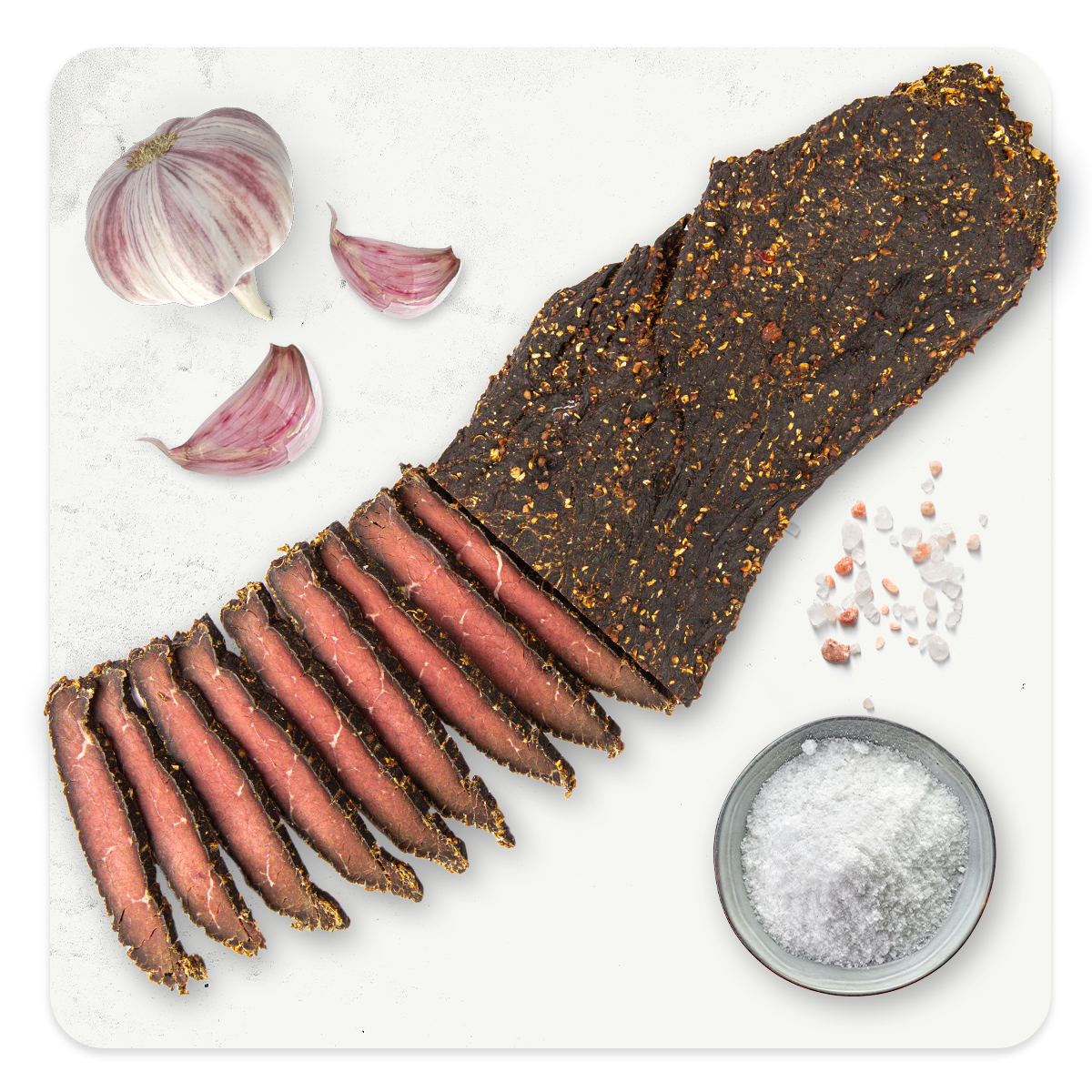
- Lean biltong and jerky – A quick and easy snack to fuel yourself straight after a tough session.
The formula is straightforward: protein for repair, carbs if needed for energy replenishment, and enough fluids to rehydrate properly.
How much protein do active people need?
Protein needs vary depending on:
-
Body weight
-
Training intensity and frequency
-
Goals such as muscle gain, fat loss, or maintenance
- Overall activity levels
If you’re regularly lifting weights or doing high-intensity training, your protein requirements are naturally higher than someone who is mostly sedentary.
Rather than cramming all your protein into one post-workout meal, aim to distribute it evenly throughout the day. A solid breakfast. A protein-rich snack. A balanced lunch. Something around training. A decent dinner.
That approach supports muscle repair far more effectively than one perfectly timed shake.

Why air-dried meat makes training fuel easier
Real life doesn’t always leave room for perfectly timed sit-down meals.
Work deadlines. School runs. Long commutes. Back-to-back meetings. Life gets busy.
That’s where convenient, high-protein snacks make a genuine difference.
Air-dried meat snacks like jerky and biltong offer:
-
High protein per serve
-
Low sugar
-
No artificial flavours
-
No added sugar
-
No preservatives
- No refrigeration required
At The Jerky Co, we use 100% Aussie MSA-grade beef, marinated for over 24 hours and air-dried using traditional methods. No shortcuts. No unnecessary additives. Just quality protein that fits straight into your gym bag.
It makes the protein before or after workout question a whole lot simpler.
Biltong or jerky around training?
Both biltong and jerky deliver solid, high-quality protein. The main difference comes down to texture and when you feel like eating it.
Some days you want something softer and easier. Other times, you’re after that classic chew.

Biltong tends to be:
- Softer in texture
- More tender
- Easier to chew
- A comfortable option straight after training

Beef jerky is typically:
- Chewier
- Bigger on bold flavour
- Ideal between meals
- More satisfying over longer stretches
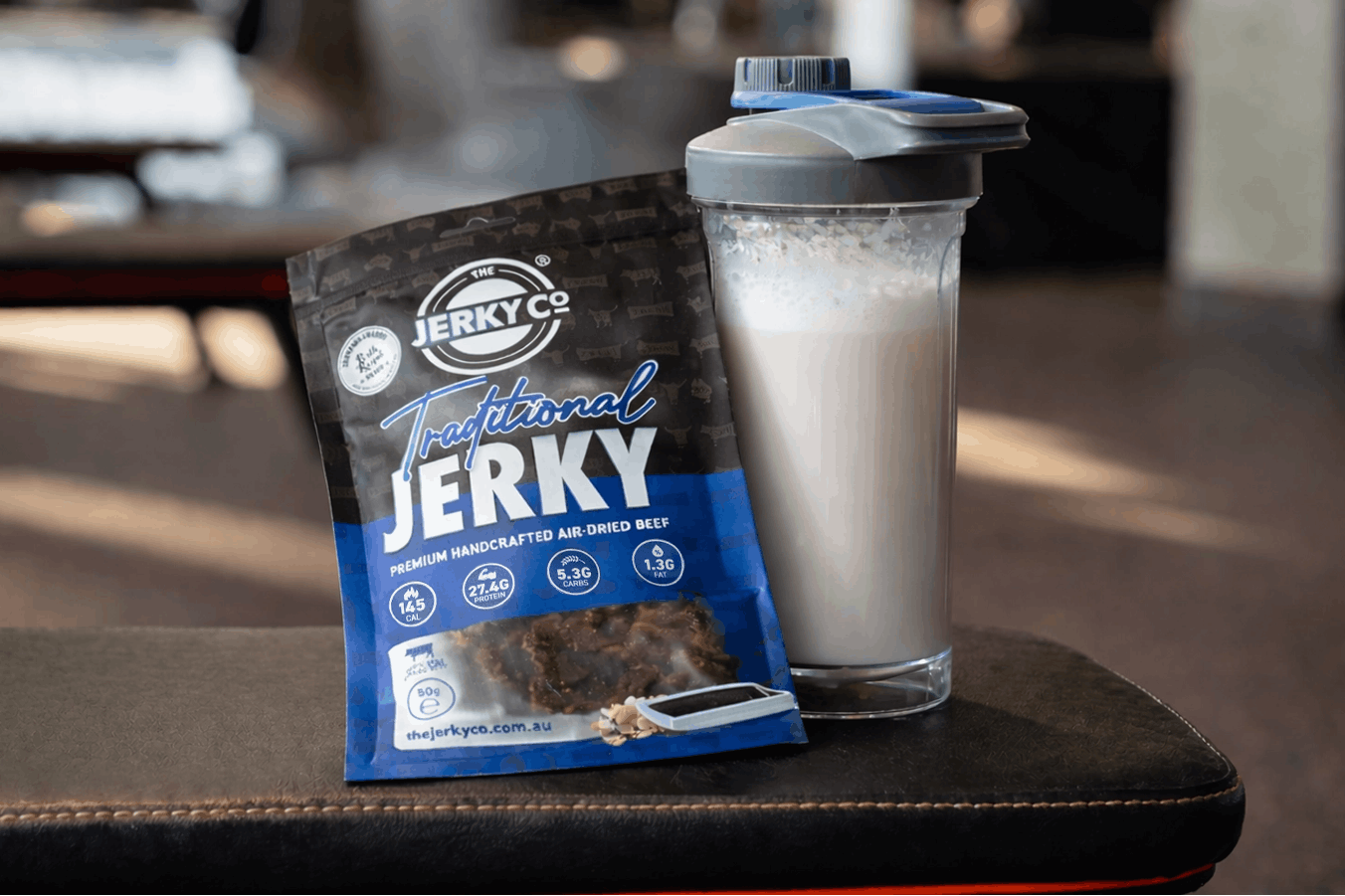
A lot of gym-goers reach for Lean Biltong post-session because it feels lighter and easier to get down when you’ve just finished a tough workout. Traditional Jerky shines as a pre-workout bite or a mid-morning protein top-up when you want something that lasts.
Both support muscle recovery. Both fit seamlessly into an active routine. It really comes down to preference and timing.
Common mistakes that slow recovery
Even solid training programs can be undermined by small nutrition habits.
A few common ones include:
- Relying heavily on sugar – Quick spikes followed by energy crashes do little to support muscle repair.
- Ignoring protein intake – Training hard without enough protein slows the rebuilding process.
- Obsessing over perfect timing – Daily consistency matters more than eating within a precise 20-minute window.
- Skipping hydration – Even mild dehydration can impact performance and recovery.
Train hard. Recover smarter.
Protein plays a central role in muscle repair, recovery, and long-term progress.
So should you eat protein before or after workout sessions?
The honest answer is both can help. What matters most is:
-
Getting enough protein across your day
-
Pairing carbs strategically when needed
-
Choosing high-quality sources
-
Staying consistent
Before training, think carbs first and add some protein if it suits your timing. After training, prioritise protein and replenish energy if your session demands it.
If you want a convenient, high-protein option that fits straight into your routine, explore our range online. Or make it effortless with a Jerky Co Snack Subscription so your gym bag is always stocked and ready for the next session.
Frequently asked questions
Q. Is it okay to workout fasted?
Yes, for many people it’s perfectly fine. Fasted training can work well for shorter or lower-intensity sessions, especially first thing in the morning.
However, if you’re doing heavy strength training, long endurance sessions, or high-intensity workouts, having some carbohydrates beforehand may help performance. The key is how you feel and whether you’re still meeting your overall protein and energy needs across the day.
If you regularly train fasted but struggle with recovery or energy, adding protein either before or soon after can help.
Q. How much protein is too much in a day?
For most healthy, active adults, protein needs typically fall somewhere between 1.2 to 2.2 grams per kilogram of body weight per day, depending on training intensity and goals.
Going significantly above that doesn’t usually provide extra muscle-building benefits. Your body can only use a certain amount efficiently for muscle repair, and extremely high intakes may simply replace other important nutrients in your diet.
Q. What foods to avoid before working out?
Before training, it’s best to avoid:
- High-fat meals that digest slowly and can feel heavy
- Very high-fibre foods that may cause stomach discomfort
- Large portions eaten too close to your session
- Excessive caffeine if you’re sensitive
Stick to easily digestible carbohydrates and moderate protein, especially if you’re eating within 1–2 hours of your workout.
Q. Can you build muscle without protein after a workout?
You can still build muscle if you don’t eat protein immediately after training, as long as your total daily protein intake is adequate.
Muscle repair and growth happen over hours and days, not just in the minutes after a session. However, regularly skipping protein after workouts may slow recovery and make it harder to optimise muscle gains over time.